
Globeo blog
Mining Runs on Rotations. Crew Lodging Has to Rotate With It.
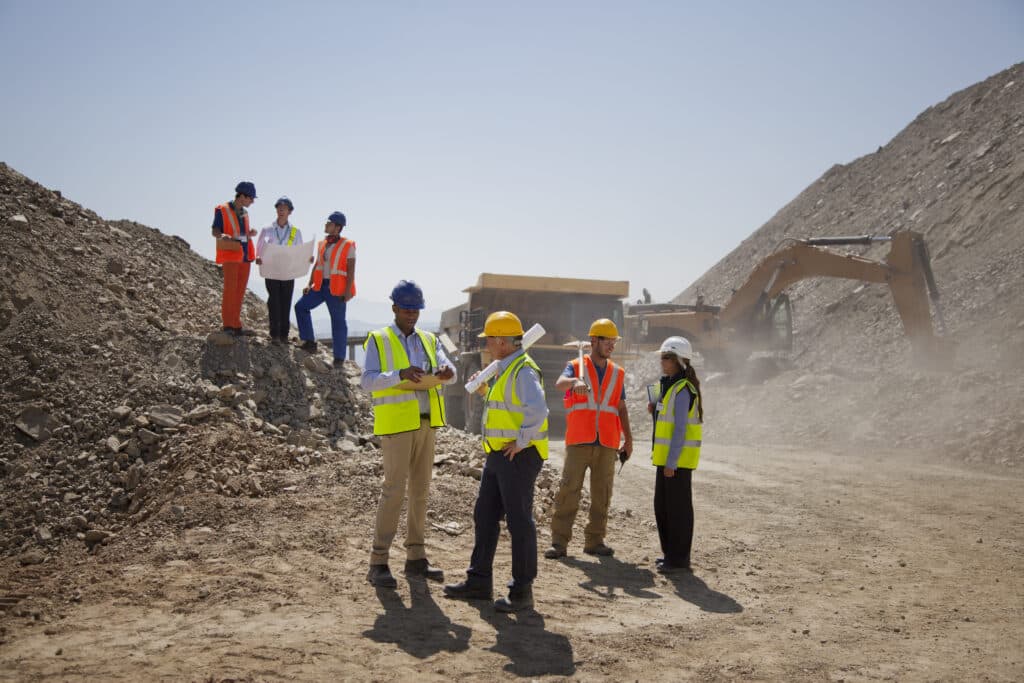
The mill comes down at six on a Friday morning and everybody on site already knows the number: nineteen days. In that window a crew has to pull liners, change out a crusher, rebuild two conveyor drives, and get the circuit back up before the stockpile runs the plant into a hole it cannot climb out of. To do it, a site that normally runs a hundred and forty people will run north of four hundred for three weeks, then drop back to a hundred and forty overnight.
Nobody in that plan is worried about the mechanical work. The mechanical work has been scoped for months. The part that gets improvised is where two hundred and sixty extra people sleep in a county that has one interstate exit, two chain hotels, and a motel that has been fully booked by a pipeline crew since June.
Mining is bigger, and far more scattered, than people picture
Say “mining” and most people see a single enormous open pit in Nevada. The reality is thousands of mostly small operations spread across every state in the country. For 2024, NIOSH counted roughly 327,800 people working for mine operators and independent contractors across US mining, and its active-mine data puts the sand and gravel sector alone at more than 6,200 operations, with another 4,300 in stone.
Those are not remote-by-exception sites. They are rural by default, because the deposit decides the location and the deposit does not care where the hotels are. A quarry sits where the rock is. A mine sits where the ore body is. Everything else, including the workforce and everywhere that workforce sleeps, has to come to it.
The contractor surge is the actual lodging problem
Steady-state headcount is rarely the issue. Most operations have long since sorted out where their permanent workforce lives. The problem is the spike.
Planned shutdowns, mill relines, crusher change-outs, tailings lifts, plant expansions, conveyor replacements, and shaft work all bring in outside crews, and they bring in a lot of them at once. Independent contractors are a structural part of the industry rather than an exception: NIOSH’s noncoal contractor count alone runs to roughly 78,100 employees. A shutdown pulls mechanical, electrical, welding, rigging, scaffolding, and inspection crews from several different companies into one site on one schedule, and every one of those companies is separately trying to solve the same lodging question in the same small market on the same weekend.
That is how a site ends up with four contractors bidding against each other for the same twelve rooms at the only decent property within thirty miles, all of them billing it back to the same owner.
There is a timing wrinkle that makes it worse. Contractor crews cannot simply show up and start. They need site-specific hazard awareness training before they go to work, which means arrival timing is not flexible. If lodging falls through and a crew loses a day, it does not lose a day of work. It loses a day of work plus the training window, and on a nineteen-day outage that is real money.
Aggregates have the opposite problem, and it is just as hard
Quarry and sand-and-gravel work is not one long surge. It is a constant churn of short jobs: a two-week plant maintenance run, a screen media change, a portable crusher moving between pits, a paving season that pushes a contractor’s crews across four counties in a month.
Crews are small, six to twenty people, and the stays are short enough that nobody wants to build a process around them. So they get booked ad hoc, on somebody’s personal card, at whatever came up first. Multiply that by a season and you get an expense category that no one can code, no one can forecast, and no one can audit, sitting inside a business where margins are measured by the ton.
The economics are unforgiving in the other direction too. Aggregates cannot travel far before hauling costs eat the product, which is why the pits sit close to where the material gets used and why so many of them are in places with almost no commercial lodging at all.
The critical minerals buildout is adding sites where nothing exists yet
The current domestic minerals push is putting large construction workforces into places that have never hosted one. Arizona’s Resolution Copper project, Thacker Pass in northern Nevada, and Rhyolite Ridge, which is projected to create roughly 500 construction jobs before settling into about 350 operating roles, are all construction problems before they are mining problems. The industry’s own outlook already names a looming talent shortage as the trend to watch, and that shortage gets sharper the further a site sits from a population center, because the deposit decides the address and the workforce has to be brought to it.
Construction phases behave exactly like the surges above, just longer. Hundreds of workers, multiple contractors, eighteen to thirty-six months, in a county whose entire lodging supply was built for hunting season.
Rotations are not business trips, and booking them like trips fails
Mining schedules do not look like corporate travel. Crews run four-on three-off, seven-on seven-off, fourteen-and-fourteen, days flipping to nights mid-rotation. That creates lodging requirements that most booking tools handle badly:
Rooms have to follow the roster, not the individual, because the person in the bed changes with the rotation. Night-shift crews need dark, quiet rooms during daylight and a property that does not run housekeeping through the hallway at ten in the morning. Check-in and check-out times almost never match shift change. Trucks, crew cabs, and equipment trailers need somewhere to park that will not get them towed. And when a rotation gets extended by two days because a liner bolt sheared, somebody has to hold the rooms without re-booking every reservation from scratch.
Handled as one-off reservations, every one of those is a phone call. Handled as a program, they are just how the account is set up.
Man camp, hotel, or both
For remote sites, the honest answer is that it depends on the market and the duration, and it is worth running the math rather than defaulting.
Camps make sense where there is genuinely nothing, where the workforce is large enough to fill them, and where the duration justifies standing one up. Hotels win more often than people expect once you account for what a camp actually costs to build, feed, staff, and demobilize, and once you count the retention effect of putting a crew somewhere with a real bed and a town nearby. Camp accommodations are part of the network we can book into, though Globeo does not own or operate camps. The useful part is being able to compare both against the same job and book whichever one wins, rather than being locked into whichever one your provider happens to sell. That is the same framing we walked through for oilfield crews, and the logic transfers cleanly to mine and quarry work.
What a managed program changes
The mechanics are unglamorous, which is the point. Globeo works across a network of more than 30,000 partnered hotels, and we work with properties outside it when a job calls for it, so a quarry two hours from anywhere is a sourcing problem we handle rather than one the site’s admin handles between other duties. Same-day bookings are typically confirmed in five to ten minutes, future stays in under thirty.
On the money side, the folios from every property consolidate into one invoice issued every Tuesday covering the previous seven nights of audited rooms, with statements on Thursday, delivered by email as a PDF invoice plus an Excel detail file for reconciliation. Charges run through a proprietary audit algorithm that compares booked against billed, with variances beyond a small threshold pulled for manual review and resolved directly with the hotel. Stays crossing thirty days, common on construction and long outages, get tracked for state occupancy tax exemption, with the tax refunded or removed.
Because room nights carry cost codes, a shutdown can be coded to the shutdown, a construction phase to the phase, and a pit to the pit, which is usually the first time anyone can answer what lodging actually cost per project. Across our client base, negotiated rates average around 35 percent below published rates, with the range running from single digits to roughly half depending on market and volume. There are no contracts, minimums, or subscriptions, which matters in an industry where the need spikes and disappears.
The bottom line for mine and quarry operations
Lodging in mining is not a travel problem. It is a mobilization problem that happens to involve hotels. Headcount triples for a shutdown and collapses again. Crews rotate on schedules no booking tool was designed for. The deposit is in a county with two hotels, and four contractors are all calling the same front desk.
Treat it as infrastructure instead of an errand, with one program covering every site, rooms placed close to the gate, rotations absorbed as they change, and a single audited invoice coded to the job, and the whole category stops being something the site figures out in the two weeks before an outage.
Frequently Asked Questions
What makes crew lodging harder at mines and quarries than at other worksites?
Location and volatility. Mines and quarries sit where the deposit is, which is usually rural, and their lodging demand is not steady. Headcount can triple during a shutdown or a construction phase and drop back within days. That combination, thin local inventory plus sharp demand spikes, is what breaks ad hoc booking.
How do you handle lodging for a mine shutdown or mill reline?
Plan it as a mobilization. Confirm the peak headcount and the rotation pattern early, source across a wide radius rather than one property, place crews as close to the gate as inventory allows, and hold the rooms under one account so competing contractors are not bidding against each other for the same twelve rooms. Then absorb the schedule changes as they happen, because outages always move.
Do mining crews need hotels or man camps?
It depends on the market, the headcount, and the duration. Camps make sense where there is no commercial inventory and the workforce is large enough and staying long enough to justify standing one up. Hotels frequently win once the full cost of building, feeding, staffing, and demobilizing a camp is counted, along with the retention benefit of a real room. Camp accommodations are bookable within our network, though Globeo does not own or operate camps, so the comparison can be made on the merits of the specific job.
How does lodging work with rotating shift schedules?
The room has to follow the roster rather than the individual, since who occupies a bed changes with the rotation. Night-shift crews need quiet, dark rooms during the day. Check-in and check-out rarely line up with shift change, and extensions happen without warning. A managed program handles those as standing account requirements instead of a new negotiation on every stay.
How is crew lodging billed for mining operations?
Individual hotel folios consolidate into a single invoice issued weekly, every Tuesday, covering the previous seven nights of audited qualifying rooms, with statements on Thursday. It arrives by email as a PDF invoice with an Excel detail file for reconciliation. Room nights carry cost codes, so lodging can be attributed to a specific shutdown, construction phase, pit, or contractor.
Can lodging costs be tracked per project or per site?
Yes. Cost coding at the room-night level is what makes that possible, and it is typically the first time an operation can see what lodging actually cost a given outage or construction phase rather than seeing one lump number for the quarter.
Brady George, VP of Sales, Globeo
Globeo builds crew lodging programs for mining, aggregates, and heavy construction: sourcing in markets with almost no inventory, rotations and roster changes absorbed as they happen, and one audited weekly invoice coded to the job. If your next shutdown is being planned around whichever hotel answers the phone, talk to us.
Talk through this in your operation.
A 30-minute demo, a real person from the concierge desk on the call, and the numbers from your last crew rotation.